At 9 p.m., a prospect searches for a nearby salon, dental office, or HVAC contractor from a phone. Your listing shows an old closing time, the booking link leads nowhere, and the first call reaches voicemail. The prospect doesn't wait. They contact the next business that answers.
That lost opportunity usually isn't mysterious. It happens when a local listing fails to build trust, a service page hides the phone number, a paid lead arrives after hours, or a staff member can't schedule while serving another customer. The strongest lead generation examples follow the entire path from first search to booked appointment. They identify the leak, fix it with a practical workflow, and measure the result that matters.
The examples below are designed for small local teams. Each one includes a tactic you can implement this week, a realistic business scenario, and a measurement approach that goes beyond impressions or raw contact volume.
1. Google Business Profile Optimization
A Google Business Profile often introduces a local customer to your business before they visit your website. A salon with current service descriptions, recent photos, accurate hours, and a working booking link gives a searcher several direct ways to take action. A law firm can use relevant categories and practice-area descriptions to appear for more specific searches in its city.
The leak occurs when the profile creates interest but fails at the contact stage. An outdated phone number, missing holiday hours, or a booking button that leads to an abandoned page can turn high-intent discovery into a lost lead.
Fix the handoff from listing to appointment
Complete every relevant field, add each major service with a clear description, and set special hours before holidays. Use the same phone number on the profile, website, and call-handling system so attribution doesn't break when a prospect moves between channels. Respond to reviews promptly and keep photos representative of the current business.
A California state small-business profile counted approximately 3.9 million small businesses in 2018, representing more than 99.8% of businesses in the state. Those businesses employed about 7.0 million workers, or 48.8% of California's workforce, which helps explain why owner-operated teams need simple systems that don't depend on constant manual monitoring. California's state small-business profile provides that historical benchmark.
Practical rule: Treat the profile as a booking surface, not a directory entry.
Measure profile calls, direction requests, booking clicks, answered conversations, and appointments created. For a detailed phone-focused implementation, see how to turn a Google Business listing into a call source.
2. Local Service Landing Pages
A general homepage rarely answers the exact question behind a local search. A dental group should give each office its own page with the local team, services, directions, reviews, phone number, and booking path. A cleaning company serving several suburbs should create useful area pages that explain its real coverage instead of changing only the city name.
The lead leaks when the page attracts a visitor but forces them to hunt for the next step. A service-area page with no visible phone number, generic copy, or unclear availability makes the prospect do work your receptionist should handle.
Build pages around real intake questions
Write unique copy for every service and location. Add the questions your staff hears repeatedly, such as whether a new patient is accepted, how long an estimate takes, which neighbourhoods are covered, or what information a caller should have ready. Keep the business name, address, and phone number consistent across the site and directories.
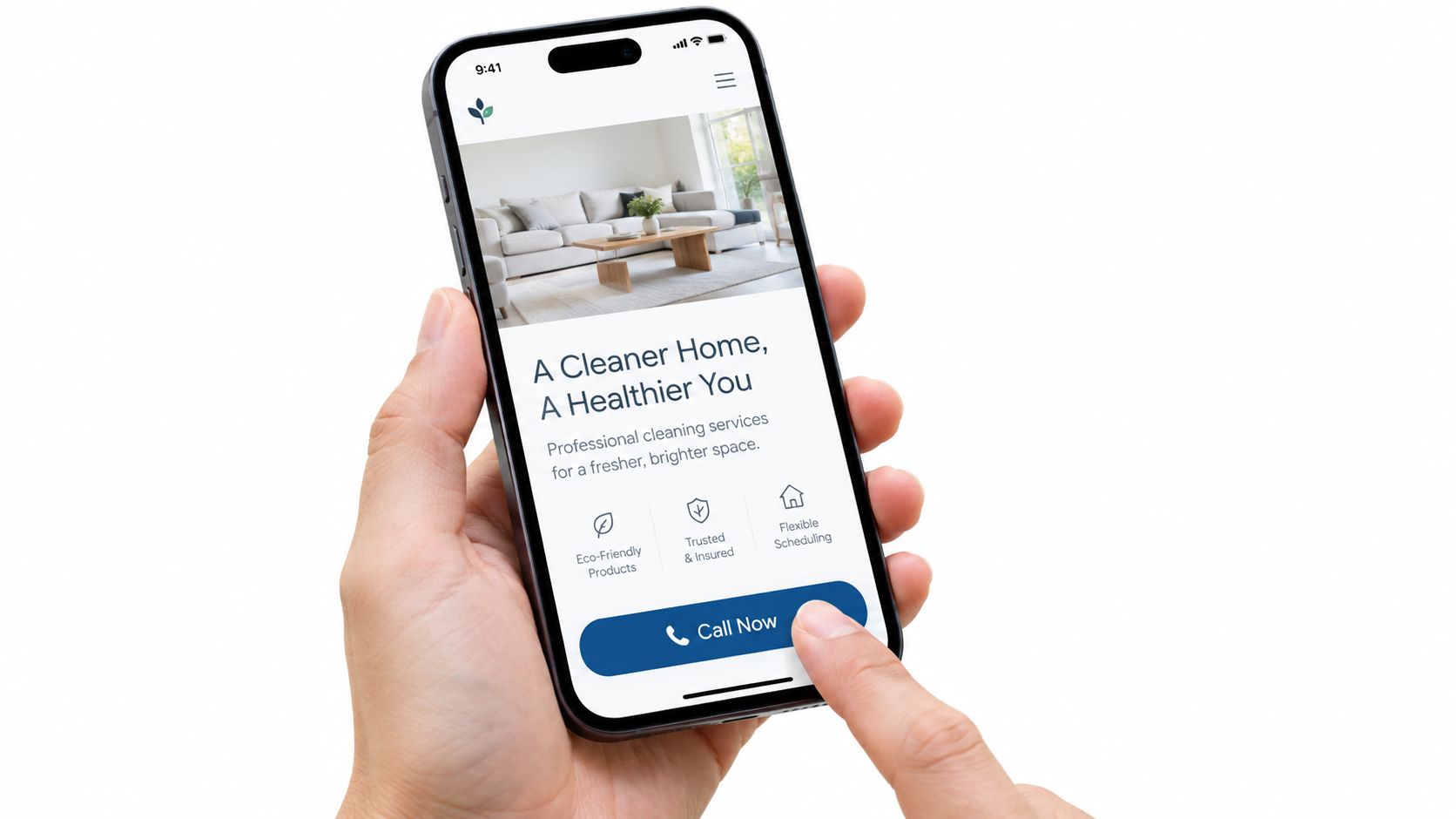
Place the primary phone number and booking button near the top of the page, then repeat the next step after the service explanation and FAQs. A visitor looking for emergency plumbing should be able to call immediately, while someone comparing routine dental services may prefer to review details before booking.
For each page, track the path from organic landing visit to phone tap, form completion, answered call, qualified inquiry, and appointment. Don't treat every form submission as a successful lead. Remove spam, duplicates, existing customers, and requests outside your service area where appropriate.
A strong page answers three questions quickly: Can you solve my problem? Do you serve my location? How can I book?
3. Click-to-Call Buttons and Mobile-First Phone CTAs
Many local prospects don't want to complete a form. They want to ask whether you have an opening, confirm that you serve their address, or understand the price before committing. A prominent mobile phone button lets them move from intent to conversation without copying a number or navigating a contact page.
A plumbing company can use a sticky “Call Now” bar while a dental practice keeps the main number in the header and on every location page. The conversion gap appears when the number is buried below the fold, the button isn't tappable, or the person calls outside staffed hours.
Make the phone the shortest path
Use one clear action on mobile, such as “Call,” rather than competing buttons with vague labels. Test the page on a normal phone and check whether the number is visible without scrolling. Assign distinct tracking numbers to the website, Google Business Profile, and paid campaigns if your reporting system can preserve the source.
The number alone isn't enough. If a prospect taps at night or while the front desk is handling another patient, the call still needs a useful outcome. Pair the call button with an AI receptionist that can answer common questions, collect service details, and check calendar availability.
Google reported that more than 2.2 million California businesses used its no-cost tools to receive calls, bookings, reviews, direction requests, or other direct customer connections. Its California economic-impact report estimated $223 billion in economic activity in 2025 across businesses, nonprofits, publishers, creators, and developers. These company-published figures are regional evidence that direct actions deserve measurement, not proof that every campaign will produce the same result. Google's California economic-impact report provides the source.
Track calls answered, qualified conversations, booked appointments, and after-hours leads recovered. Website traffic is useful context, but it won't tell you whether the phone path closes the gap.
4. Online Appointment Booking Links and Widgets
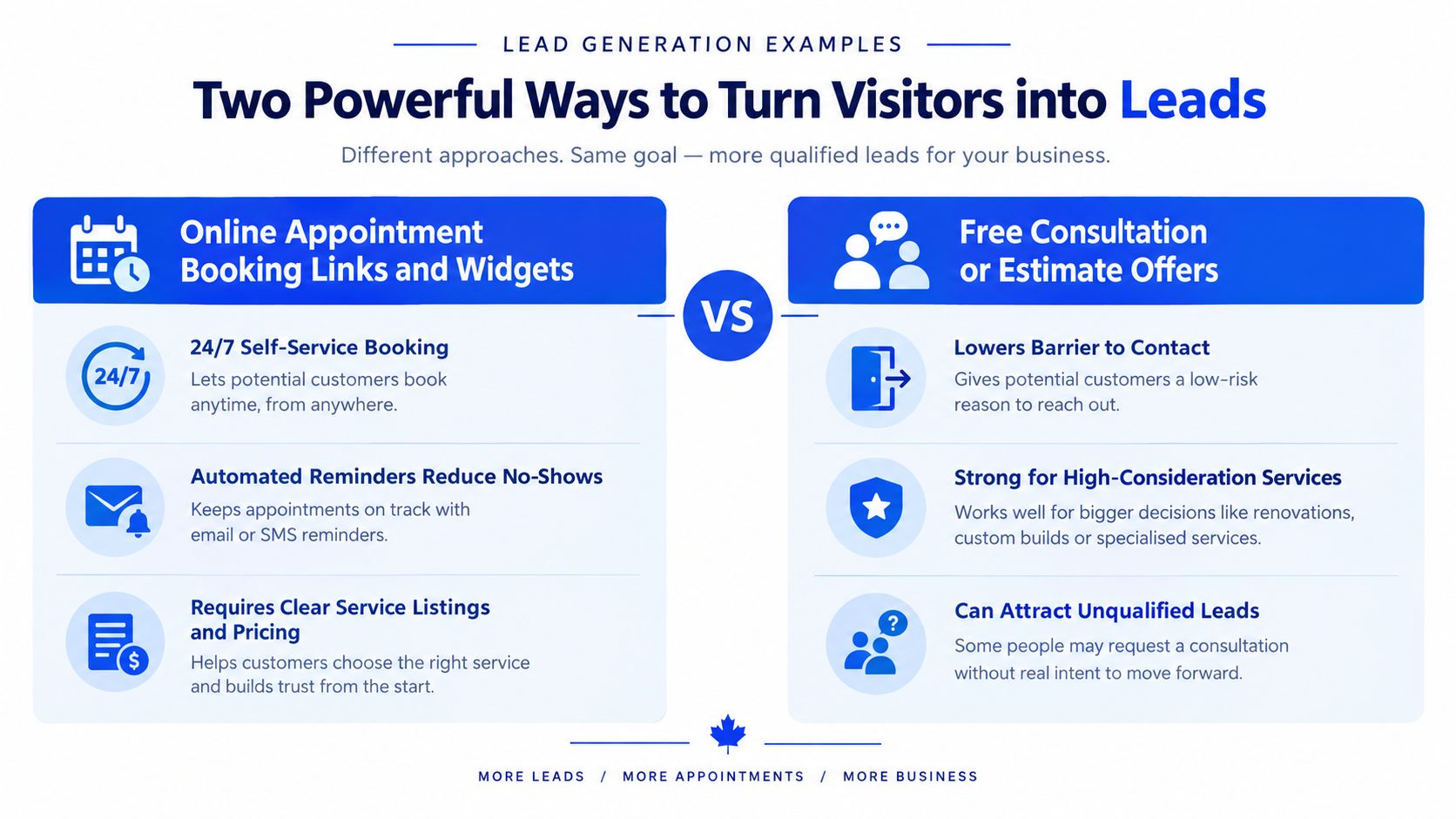
Online booking works well for customers who already know what they want. A barber can let a visitor choose a service and provider, while a medical practice can offer available appointment types without requiring a phone conversation. Tools such as Square Appointments, Vagaro, Booksy, and Zocdoc are familiar examples in their respective categories.
The failure point is usually incomplete information. If a booking widget doesn't show service duration, provider availability, price expectations, or cancellation rules, prospects abandon it or call with questions. Others prefer speaking to a person, so removing the phone option creates a different leak.
Offer two routes to the same calendar
Put the booking link on the homepage, service pages, social profiles, and Google Business Profile. Use plain service names, accurate durations, and current prices where appropriate. Keep a phone option beside the widget for people who need help choosing.
An AI receptionist can handle the questions the widget can't. Someone calling a med spa may ask which treatment suits a concern, while a home-service customer may need to explain the job before choosing a visit type. The system should either answer from approved business information or create a clear callback task.
Review bookings by source and service. Track completed bookings, cancellations, rescheduled appointments, and calls that began with a booking question. A booking click is only an intermediate action. The useful outcome is a viable appointment on the calendar.
For a deeper comparison of scheduling workflows, read the guide to online appointment scheduling software.
5. Missed-Call Text-Back Automation
A missed call is often a lead that has already chosen a channel. The person may be calling a plumbing company from a job site, a salon while comparing openings, or a clinic during a lunch break. If the call goes to voicemail and the business responds much later, the prospect may have moved on.
Missed-call text-back automation sends a short SMS after an unanswered call, usually with a question and a booking link. The first message should be useful, not promotional: acknowledge the missed call, identify the business, and make the next action obvious.
Recover the conversation without creating compliance risk
Keep the message short and personal. Include a booking option if the caller can schedule independently, but offer a reply path for questions. Follow applicable consent, carrier, and messaging requirements, including TCPA considerations where relevant. Don't assume a text solves every situation. An emergency plumbing caller may need a live conversation, while a med spa prospect may happily choose a consultation time from a link.
Measure text-back responses separately from ordinary calls. Record messages sent, replies received, booking links opened, appointments created, and conversations that required staff follow-up. Compare qualified bookings, not just response volume.
A regional California HVAC business reported a 186% increase in qualified leads, 94% year-over-year revenue growth, and a 67% improvement in off-season bookings after combining local SEO, content, email, digital-presence, and reputation work. The case study is marketing-reported rather than independently audited, so use it as a measurement model, not a promised outcome. The HVAC case study supports the value of tracking the funnel beyond call volume.
If you need to diagnose why calls reach voicemail, use this guide to phone calls going straight to voicemail. Decide whether text-back is enough or whether a live AI receptionist should answer immediately.
6. Free Consultation or Estimate Offers
A free consultation, inspection, estimate, or assessment gives an uncertain prospect a low-risk next step. Roofing companies can offer an inspection, law firms can offer an initial consultation, and an aesthetics clinic can invite someone to discuss treatment options before buying.
The offer fails when “free” is vague. Prospects want to know what happens, who they speak with, how long it takes, whether they must travel, and what information they should prepare. If the offer creates more uncertainty than the original service, it won't generate useful appointments.
Define the offer before promoting it
State exactly what the consultation includes and what it doesn't include. Ask for basic qualification details at booking, such as location, service need, timeline, and budget range when relevant. Make the offer bookable by phone, web, and text so prospects can choose the lowest-friction route.
A contractor might ask whether the property is within its service area and whether the customer needs repair or replacement. A family law firm may need the matter type and preferred consultation format. These questions protect the calendar without turning the first interaction into an interrogation.
Measure consultation requests, qualified consultations, show rates, sales opportunities, and revenue by offer. A large number of free bookings can hide poor qualification or low attendance. Use an AI receptionist to explain the offer, answer routine questions, and secure a calendar slot while the prospect is ready.
The best lead magnet isn't the one that attracts the most contacts. It's the one that creates a clear, properly qualified appointment your team can serve.
7. Google Local Services Ads
Google Local Services Ads can put eligible local businesses in front of people searching with immediate intent. Plumbers, electricians, locksmiths, cleaners, and some legal providers may receive calls, messages, or bookings through the programme, with advertisers paying for leads rather than ordinary clicks. Availability and eligibility vary by market and category.
The leak is expensive because the business pays for attention but loses the call. A locksmith that misses an urgent caller, or a lawyer that lets a message sit until the next morning, has paid for a lead without completing intake.
Treat paid leads as live service requests
Route every ad-generated call to a number that someone or something can answer. Review call recordings where available and refine the intake script around service area, urgency, job type, and appointment availability. Keep the coverage plan active when staff are on jobs, in treatment rooms, or away from the desk.
Don't judge the campaign by lead count alone. Separate spam, duplicates, existing customers, wrong-number calls, and inquiries outside your category. Track cost per qualified call, cost per booked appointment, booking rate among answered calls, and revenue from completed work.
A paid lead should move through a defined sequence:
- Answer: Greet the caller and identify the business without forcing them through a long phone tree.
- Qualify: Confirm the service, location, timing, and any category-specific requirements.
- Book: Offer a viable slot or create a clearly owned follow-up task.
- Attribute: Preserve the campaign source through the appointment and revenue record.
An AI receptionist can provide coverage outside office hours, but it must use accurate business information and clear escalation rules. Automation is useful only when it protects the customer experience and the budget at the same time.
8. Meta Lead Ads with Instant Forms
Meta Lead Ads let a person submit contact information from Facebook or Instagram without leaving the app. That reduced friction suits a med spa promoting a consultation, an aesthetics clinic offering an assessment, or a contractor advertising a seasonal inspection.
The common failure is treating the form submission as the conversion. A prefilled form can capture an interested person who has not confirmed the service, location, or timing. If the business waits to respond, the lead cools while the prospect continues browsing.
Connect the form to immediate intake
Ask only what the team needs to choose the next step. A home-improvement contractor may need the property location, service type, and preferred contact method. A clinic may ask which treatment the person wants and whether they prefer a phone or online consultation.
Send submissions into a CRM, callback queue, or scheduling workflow immediately. Use geographic targeting around the actual service area rather than accepting inquiries the team can't serve. A call-back system or AI receptionist can confirm details, answer routine questions, and turn the form into an appointment.
Measure qualified leads, contact rate, appointments booked, and revenue, while keeping the form source attached to each record. Compare creative and offers based on booked outcomes, not cheap submissions. An ad that generates many low-intent forms can consume more staff time than a smaller campaign producing serious callers.
The strongest social lead ads make the next action specific. “Book a skin consultation” is clearer than “Learn more,” provided the business can answer questions and fulfil the offer after the form arrives.
9. Review Generation Campaigns
Reviews influence whether a searcher trusts a local business enough to call. A dental practice can send a review link after an appointment, while a cleaning company can request feedback after the job is complete. The request should arrive while the customer still remembers the service, but only after the business has delivered the experience.
The leak occurs when review generation is disconnected from operations. Sending a request before the appointment, asking every caller regardless of outcome, or ignoring negative feedback can make the process feel automated in the wrong way.
Ask at the right moment and learn from the response
Send the request after service completion through SMS or email with a direct review link. Don't offer incentives in exchange for reviews if that violates platform policies. Respond to positive and negative reviews briefly and professionally, and use recurring complaints to improve the service or intake process.
Review freshness may matter to consumers, but survey-based intent shouldn't be treated as guaranteed conversion behaviour. One California local-marketing source reported that 32% of consumers said they look only at reviews from the previous two weeks, while 18% said they act only on reviews from the previous week. Those figures describe stated intentions, not observed lead lift, as explained by the California local-marketing case studies.
Track review requests sent, reviews received, rating patterns, profile calls, qualified conversations, and bookings. Don't claim that more reviews automatically produce more appointments. Compare the same business over time and segment by service, location, and source where possible.
An AI receptionist can ask for feedback after a completed interaction, but it shouldn't request a review from a caller who has only asked a question. Timing protects trust.
10. Referral Programs for Local Businesses
Referrals shorten the trust-building stage because a prospect hears about the business from someone they know. A salon can give an existing customer a future-service credit when a friend books. A cleaning company can provide a simple account benefit for a successful referral, while a professional practice may need to avoid incentives altogether because of industry rules.
The leak is usually poor timing or poor tracking. Asking before the customer has experienced the service feels premature, and a complicated reward gets forgotten. If the booking system doesn't record the source, you can't tell whether the programme creates qualified appointments.
Make sharing easy and the reward clear
Ask after a completed service or another high-satisfaction moment. Put the referral instruction in the confirmation message or receipt, and explain exactly when the reward applies. Use a booking field such as “How did you hear about us?” and reconcile it with referral codes or links.
Keep the programme simple:
- Choose one action: Ask the customer to share a link, code, or phone number.
- Define success: Make the reward depend on a referred person who books or completes the required step.
- Check eligibility: Review legal and professional rules before offering referral fees or incentives.
- Record the source: Capture the referrer, service, appointment status, and outcome.
Don't assume every referral is automatically valuable. A referred prospect outside the service area still consumes intake time, and a customer who books but doesn't show may not justify the reward. Track qualified referrals, booked appointments, show rates, and revenue separately from ordinary new-business activity.
10 Local Lead Generation Methods Compared
| Tactic | Complexity 🔄 | Resources & Speed ⚡ | Expected Outcomes ⭐📊 | Ideal Use Cases 💡 | Key Advantages ⭐ |
|---|---|---|---|---|---|
| Google Business Profile Optimization | Low → ongoing maintenance 🔄 | Low resource needs; moderate time to ranking ⚡ | Better map visibility and more direct calls/directions 📊 | Appointment-based and storefront businesses | Free to claim; strong local ranking influence ⭐ |
| Local Service Landing Pages | Moderate–High (unique content per page) 🔄 | Higher content & SEO effort; slow to rank ⚡ | Steady, compounding organic leads for targeted queries 📊 | Multi-location and service-area businesses | Targets high-intent searches; scalable SEO asset ⭐ |
| Click-to-Call Buttons & Mobile CTAs | Low (simple dev/UX) 🔄 | Minimal implementation cost; immediate impact ⚡ | Increased high-intent phone leads and faster conversions 📊 | Mobile-first local services (plumbing, HVAC) | Very low cost; converts mobile users instantly ⭐ |
| Online Appointment Booking Links & Widgets | Moderate (integration + calendar sync) 🔄 | Tool/subscription costs; enables 24/7 bookings ⚡ | More bookings, fewer no-shows with reminders 📊 | Salons, clinics, medical and appointment-based businesses | Automates bookings; reduces staff time and friction ⭐ |
| Missed-Call Text-Back Automation | Low–Moderate (phone/CRM integration) 🔄 | Low ongoing effort; very fast lead recovery ⚡ | Recovers missed leads and increases contact rate 📊 | Trades and field services with busy staff | Recovers lost calls quickly; simple to scale ⭐ |
| Free Consultation / Estimate Offers | Low (offer setup) 🔄 | Staff time required to deliver; quick lead generation ⚡ | High conversion for high-consideration services 📊 | Home services, legal, aesthetics and professional services | Low barrier to contact; effective for complex sales ⭐ |
| Google Local Services Ads (Pay‑Per‑Lead) | Moderate (verification & management) 🔄 | Pay-per-lead budgets; rapid top-of-search visibility ⚡ | Prominent placement and qualified leads; CPL varies 📊 | Emergency and vetted local services (plumbers, locksmiths) | Pay only for leads; Google-backed trust badge ⭐ |
| Meta Lead Ads with Instant Forms | Moderate (ads + integration) 🔄 | Ad spend required; very fast lead capture ⚡ | High volume leads with variable readiness 📊 | Med spas, seasonal offers, local promos | Low-friction capture and precise local targeting ⭐ |
| Review Generation Campaigns | Low–Moderate (automation & policy compliance) 🔄 | Low recurring cost; gradual impact over time ⚡ | Improved trust, conversion, and local search visibility 📊 | Any reputation-dependent local business | Boosts credibility and SEO; repeatable process ⭐ |
| Referral Programs for Local Businesses | Moderate (tracking & rewards) 🔄 | Low direct ad cost; requires program management ⚡ | Higher-quality, lower-cost leads with better conversion 📊 | Salons, wellness, recurring-service businesses | High conversion rates; builds loyalty and word-of-mouth ⭐ |
Build a Lead System That Books Appointments
These lead generation examples share one operating pattern. First, capture intent where it appears, whether that's a Google listing, service page, social form, review profile, or referral message. Next, respond while the prospect is still ready to act. Finally, turn the conversation into a booked slot, not merely a name in a spreadsheet.
Local businesses often measure the first half of the funnel because those numbers are easy to see. They count impressions, profile views, form submissions, calls, and clicks. Those indicators matter, but they don't tell you whether the prospect reached the calendar. The useful chain is more specific: source, contact, answer, qualification, booking, attendance, and revenue.
Phone inquiries deserve particular attention. Google reported that more than 2.2 million California businesses used its tools to receive direct customer connections such as calls and bookings, which reinforces the importance of measuring phone outcomes alongside web actions. That does not mean every call is qualified. A reliable system should distinguish new callers from existing customers, spam, vendors, wrong numbers, and service requests outside the business's area.
Start this week with a short implementation sequence:
- Audit the Business Profile: Check hours, services, photos, categories, booking links, reviews, and the phone number that really answers.
- Repair every service page: Add a visible click-to-call action, a booking path, location details, and FAQs based on real receptionist questions.
- Protect missed demand: Set up missed-call text-back or an AI receptionist for after-hours calls and staff workload peaks.
- Connect the calendar: Make sure the booking process reflects real service durations, provider availability, and appointment rules.
- Measure outcomes by source: Track answered calls, qualified inquiries, appointments, cancellations, show rates, and revenue instead of relying on raw lead counts.
Then establish a baseline before changing everything at once. Record missed calls, voicemail contacts, booking requests, and completed appointments for a defined period. Introduce one coverage improvement, preserve source data, and compare qualified appointments rather than comparing traffic alone.
The goal isn't to collect more contacts than your team can serve. It's to make the path from search to appointment dependable. A salon should know whether a caller booked a stylist, a clinic should know whether an inquiry became a visit, and a contractor should know whether a quote request became scheduled work. When each handoff has an owner, a response rule, and a measurable outcome, lead generation becomes an operating system rather than a collection of disconnected marketing tactics.
Heyline provides a 24/7 AI phone receptionist that learns from your website, answers calls naturally, handles common questions, and books appointments directly to your calendar. If missed calls and manual scheduling are leaking local leads, visit Heyline to connect your phone, calendar, and business information and launch a practical answering workflow.