At 7:45 p.m., a customer calls a local clinic after a long day. They only need to leave a message about tomorrow's appointment, but the greeting starts with a flat, robotic voice, races through several menu options, and never gives them a clear next step. The caller hangs up before leaving a name or callback number.
That moment is easy to dismiss as a small technical problem. It isn't. The voice on the phone is often the first direct experience a customer has with your business, and it shapes whether they stay, explain what they need, and trust the next instruction. A voice that feels too cold, rushed, casual, or cheerful can contribute to missed calls, incorrect transfers, and quiet frustration.
The phrase voice your choice should therefore mean more than selecting a pleasant sound from a list. It's a customer-fit decision. You're choosing how your business will sound when a caller is busy, worried, confused, in a hurry, or ready to book.
In the opening seconds, callers process several signals at once: warmth, pace, formality, confidence, and whether the business sounds prepared for them. This guide gives you a practical way to choose those signals, test them with real calls, and refine the result before and after launch. For the written words behind the sound, you can also review this guide to a greeting message for a business.
The Moment a Caller Hears Your Business
The first few seconds of a call carry more weight than many owners expect. A caller doesn't know whether your receptionist is capable yet. They're listening for clues. Does the voice sound calm enough to handle the request? Is it speaking at a pace they can follow? Does the greeting make it clear that they've reached the right place?
A dental patient calling about a painful tooth needs a different opening experience from a repeat commercial client asking for a delivery update. Both callers want efficiency, but their emotional starting points differ. One may need reassurance before answering questions. The other may become impatient if the greeting includes too much friendly language.
What the caller is deciding
Callers rarely analyse a voice consciously. They feel its effect through small reactions:
- Warmth: Does the voice acknowledge the person behind the call?
- Pace: Can the caller understand each question without asking for repetition?
- Formality: Does the language fit the service and the seriousness of the request?
- Confidence: Does the receptionist sound certain about what happens next?
- Presence: Does the opening suggest that the business expected calls like this?
A voice doesn't need to sound human in every detail. It needs to sound appropriate and dependable. A slightly synthetic voice with clear pacing and useful responses can create more trust than a highly expressive voice that interrupts, rushes, or uses the wrong level of enthusiasm.
Practical rule: Choose the voice for the caller's situation, not for the owner's personal taste.
A good choice also accounts for the moments when callers aren't sure what to say. Someone may pause, correct an answer, or use an unfamiliar term. The receptionist should respond patiently rather than forcing the person through a rigid sequence.
That's why voice selection belongs alongside call scripts, intake questions, calendar behaviour, and fallback language. The sound introduces the experience, but every response either confirms or contradicts that first impression.
What Brand Voice Actually Means for an AI Receptionist
A brand voice is the consistent way a business sounds when it speaks with customers. For an AI receptionist, it becomes a practical operating choice, not just a branding description. You are deciding how the receptionist should sound to the people who call, based on their concerns, expectations, and reason for contacting you.
Four levers shape that choice: tone, pace, formality, and warmth.
Tone sets the underlying mood. A calm tone can help a worried caller feel settled, while a bright tone may suit a casual booking. Pace controls how quickly information arrives and how much time the caller has to understand or answer. Formality affects vocabulary, titles, contractions, and the distance between the receptionist and the caller.
Warmth shapes how the receptionist responds around the information. A warmer voice may acknowledge confusion, use gentle transitions, or offer to repeat a question. It should not turn every call into a long conversation. It gives the caller more patience when the situation calls for it.
The same greeting can fit one caller and miss another
A relaxed neighbourhood salon may serve regulars who expect an easy, familiar rhythm. Using a first name when appropriate and asking which appointment they want can feel natural. A little lightness supports the personal nature of the interaction.
A boutique law firm handling a sensitive estate enquiry serves a different caller persona. That caller may be sharing personal information and judging whether the firm will handle it carefully. Salon-style speed or playful delivery could sound careless. Measured pronunciation, restrained warmth, and a clear explanation of the next step are a better fit.
Neither voice is universally better. The right choice depends on the caller's level of trust, urgency, and personal exposure. A test call with a realistic caller scenario can reveal this difference more clearly than a label in a setup menu.
| Lever | What It Controls | Low Setting Sounds Like | High Setting Sounds Like |
|---|---|---|---|
| Tone | The underlying mood | Serious, restrained, subdued | Bright, encouraging, energetic |
| Pace | How quickly information arrives | Deliberate, spacious, unhurried | Fast, brisk, highly efficient |
| Formality | Vocabulary and social distance | Casual, conversational, relaxed | Polished, reserved, structured |
| Warmth | Empathy and personal attention | Efficient, minimal, matter-of-fact | Reassuring, patient, attentive |
These levers help you interpret preset names instead of accepting them at face value. “Professional” may increase formality, reduce playful wording, and slow the delivery. “Warm” may add empathy and create more space for a caller to respond.
Choose the caller experience first, then adjust the levers to support it. The strongest combination may be warm and efficient, professional and reassuring, or neutral and concise. Test that combination with the people your business serves before making it the live voice.
Common Tone Options and the Caller Experience They Create
Most setup screens offer a small group of tone choices. The labels are useful starting points, but they don't tell you exactly how the call will feel. Listen for the pace, pitch, word choice, and amount of emotional acknowledgement behind each option.
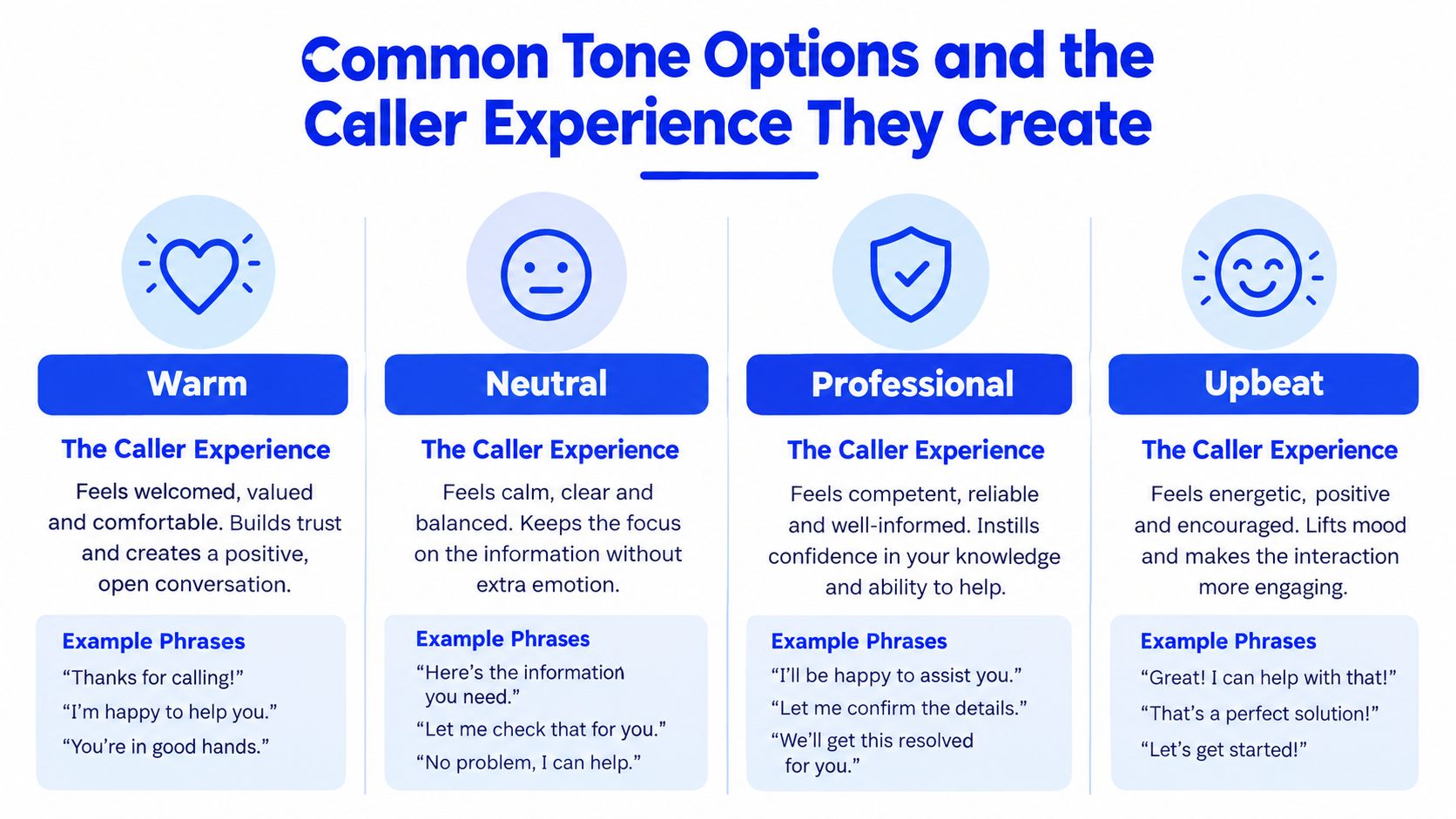
Warm
A warm voice generally uses a softer delivery, more patience, and small acknowledgements that show the caller has been heard. It can suit healthcare, counselling, home services, and other situations where people may feel stressed or uncertain.
The risk is overdoing reassurance. If a caller wants a quick answer about opening hours, lengthy empathy phrases can feel inefficient. Warmth works best when it supports clarity rather than replacing it.
Neutral
A neutral voice stays steady and avoids a strong personality. That can work well for utilities, property management, business suppliers, and other services where predictability matters more than charm.
Neutral doesn't mean unfriendly. It means the caller can focus on the information without interpreting a strong emotional signal. Owners often choose it when their customer base is broad or when several teams share the same phone line.
Professional
A professional voice tends to sound measured, precise, and slightly formal. It can fit legal, financial, medical, and specialist practices where callers first need to feel that their request is being handled carefully.
Professional delivery should still leave room for natural conversation. Overly formal language can create distance, especially when callers ask simple questions or need help correcting an answer.
Upbeat
An upbeat voice brings more energy, a lighter rhythm, and a welcoming sense of momentum. Salons, fitness studios, restaurants, and family-focused retailers may find that this style fits the mood customers expect.
The same energy can sound pushy in a serious situation. A caller reporting a sensitive legal matter or an urgent home repair may not want enthusiasm. They want a clear path forward.
The preset is only a starting point. Compare each option against the people who call, the reasons they call, and the emotional state they bring to the conversation. Then validate the choice with test calls instead of relying on the label.
Matching Voice to the Customer Who Is Calling
At 9 p.m., a homeowner calls your plumbing service because water is spreading across the floor. The caller may be unfamiliar with your business, worried about property damage, and listening for one thing first: a clear path to help. The right AI receptionist voice should fit that situation, rather than reflect the owner's personal preference.
Start by identifying the caller who matters most to the first interaction. Describe that person in three lines:
- Their likely age range or familiarity with your service.
- The reason they are calling.
- Their emotional state when they hear the greeting.
A single caller profile is easier to use than a description of every customer. You might begin with a new patient, an urgent homeowner, or a repeat business client.
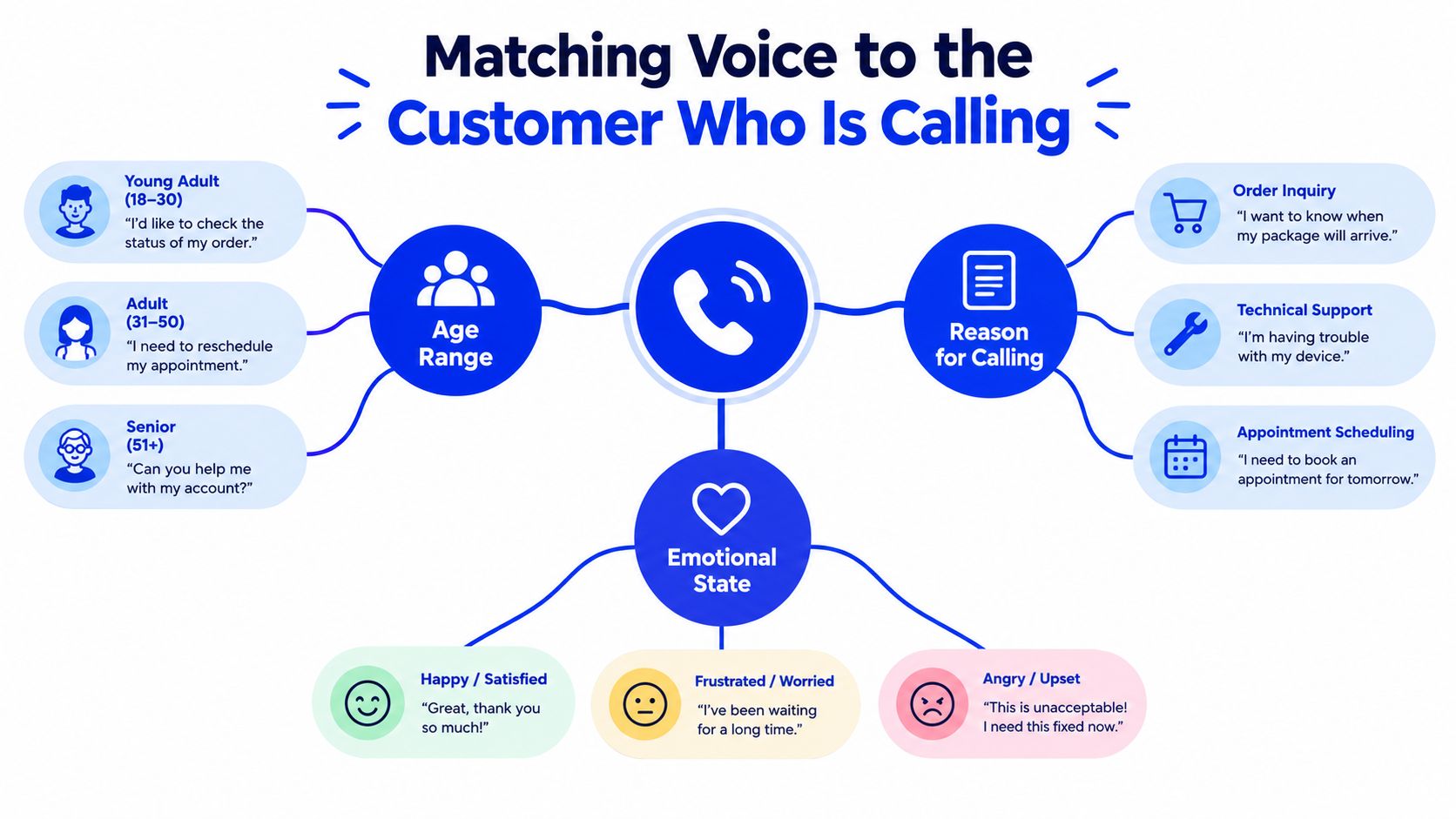
A homeowner with an urgent repair
An urgent plumbing call needs calm confidence and efficient pacing. The receptionist can acknowledge the problem, ask one question at a time, and explain the next step in plain language. A measured response helps the caller absorb instructions when worry is making it harder to concentrate.
The voice should communicate control without sounding alarmed. Long explanations, excessive enthusiasm, or a rushed delivery can make an already stressful call harder to manage.
A first-time patient
A new patient booking an appointment may need more warmth and extra time. They may be unsure which service to choose or what information the practice needs. A reassuring voice gives them room to ask questions and say when they are uncertain.
A pause does not always mean the caller has lost interest. The receptionist can repeat the question, offer a simpler version, or present one direct choice at a time. This turns an unfamiliar process into a series of manageable decisions.
A repeat B2B client
A repeat client calling a business supplier often values speed and familiarity. A brisk, professional delivery may suit the interaction better than a highly expressive voice when the caller already knows what they need.
Use the caller profile to guide the match:
- Urgency calls for calm clarity and efficient pacing.
- Familiarity supports a more conversational style.
- Stakes require measured language and extra care for sensitive subjects.
The right voice matches the caller's state, not the owner's mood.
Age can inform your assumptions about familiarity with phone systems, but it should not become a fixed rule. A younger caller may prefer a formal interaction for a legal enquiry, while an older caller may appreciate a fast, straightforward booking process. The reason for calling and the caller's emotional state usually offer stronger guidance.
Listen to the example with your caller profile beside you. Ask whether the voice gives that person enough time, confidence, and direction to complete the call. Then use the same profile when comparing voice options and judging the results of real test calls.
Running Test Calls Before You Go Live
A voice can sound perfect in a preview and still feel wrong during a real conversation. Test calls expose the moments that a short sample hides, especially interruptions, silence, uncertainty, and emotional pressure. Use your personal phone so you hear the experience as a customer, not through the office setup.
Run four calls with a consistent script.
The four-call routine
- Easy booking request: Ask for a common appointment or reservation. Listen for whether the greeting leads naturally into the request and whether the receptionist gives a clear next step.
- Angry after-hours caller: Speak with controlled frustration about a problem outside normal hours. Notice whether the voice stays calm and whether the response acknowledges the situation without sounding defensive.
- Unknown question: Ask something the receptionist isn't configured to answer. Check whether it admits the limit clearly, avoids guessing, and offers a useful alternative.
- Silent pause: Stop responding after a question. Listen for how long the system waits, whether it prompts you gently, and whether it ends the interaction too quickly.
For each call, write down two observations. One should concern the sound itself, such as pace under pressure or confidence during an unfamiliar question. The other should concern the caller's progress, such as whether you knew what to do next or felt stalled.
Use an outside listener
Ask one person who resembles your customer to make a call without coaching them through every detail. A family member may notice that the voice feels too formal. A staff member may catch a phrase that sounds unlike the business. Someone unfamiliar with the setup can reveal whether the instructions make sense without inside knowledge.
The guide to setting up an AI answering service can help you organise the broader configuration around these tests.
Finish with a simple pass-or-fix decision:
- Pass: The caller would feel heard, understand the next step, and know what happens if the system can't help.
- Fix: The caller would feel rushed, confused, ignored, or trapped in an unclear exchange.
If the result is a fix, don't immediately change every setting. First identify whether the problem comes from tone, pace, wording, or the call flow. A small, targeted adjustment makes the next test easier to interpret.
Connecting Voice Choice to the Rest of the Setup
A chosen tone only works when the rest of the call supports it. A warm voice can't compensate for a long greeting, a confusing intake sequence, or a transfer message that sounds abrupt. A professional voice loses credibility if the receptionist gives vague calendar information or uses casual wording for a sensitive enquiry.
Consider a salon using a warm voice. The greeting should be short, the receptionist should ask one friendly question at a time, and hold language should feel gentle without becoming chatty. If the caller needs a handoff, the transfer or voicemail message should preserve that same sense of care.
A law firm may need a different pattern. The greeting can state the firm name clearly, the intake should confirm the matter type, and the receptionist should explain a specific callback window when immediate assistance isn't available. The voice remains measured from opening to handoff.
| Setup Element | Warm Tone | Professional Tone |
|---|---|---|
| Greeting | Brief, welcoming, conversational | Clear, formal, identifies the practice |
| Intake questions | One question at a time with reassurance | Structured questions with precise wording |
| Calendar behaviour | Friendly explanation of available times | Direct presentation of suitable appointment slots |
| Hold language | Gentle notice that the caller may need to wait | Concise explanation of what happens next |
| Fallback message | Offers help or a callback without pressure | States the limitation and required follow-up clearly |
Read the full transcript aloud after configuring these elements. Don't read only the greeting. Include the questions, corrections, scheduling language, and fallback response. If the words sound as though different people wrote them, the caller will feel the mismatch even if they can't identify it.
Understanding what an AI receptionist is also helps you separate voice decisions from knowledge and scheduling decisions. The voice controls how information arrives, but accurate business details and reliable calendar behaviour determine whether the interaction helps.
Refining the Voice After Launch
Launching the receptionist is the beginning of the learning process. A test caller can imitate a customer, but real callers introduce combinations you didn't anticipate. They may ask casual questions in a formal setting, speak quickly because they're distracted, or react to a greeting in a way your internal team never expected.
Treat the first month as a structured listening window. Review the first group of calls, then move to a weekly batch. For every call, record three signals:
- Stayed on the line: Did the caller continue long enough to explain the request?
- Resolved the request: Did the receptionist answer, book, transfer, or capture the right follow-up?
- Tone fit: Did the voice suit the question and the caller's apparent state?
Look for patterns, not isolated reactions
One awkward phrase deserves attention, but it doesn't automatically justify a complete voice change. Look for repeated evidence. If several callers sound rushed after the same greeting, shorten or slow that opening. If casual callers react poorly to formal language, adjust the wording or formality rather than replacing the entire voice.
Make one or two targeted changes at a time. Constant edits make it difficult to tell which adjustment improved the experience. Record the date, the setting changed, the reason for the change, and what you'll watch in the next batch.
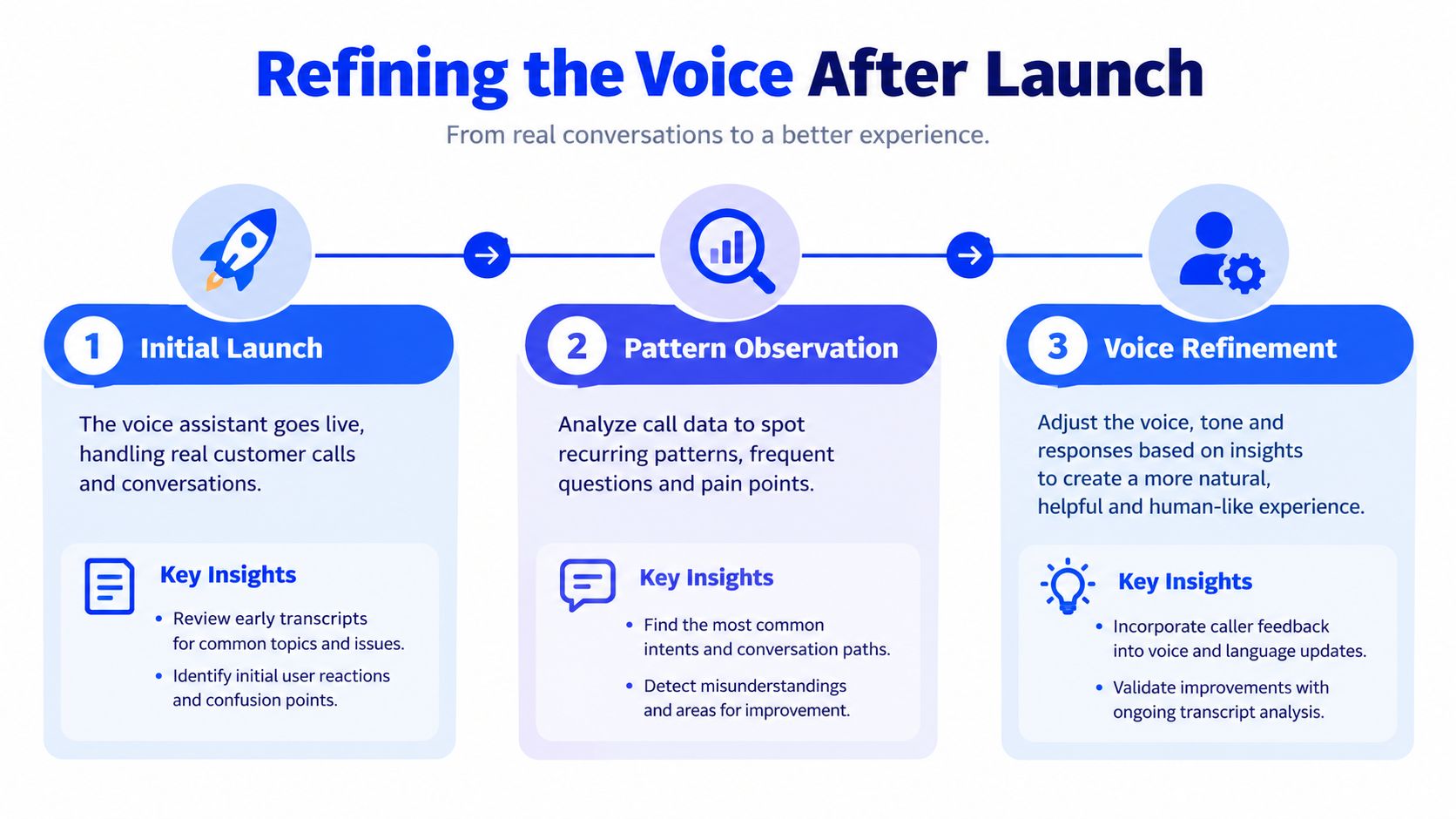
Transcripts are especially useful because they show the complete interaction. A voice may sound warm in the greeting but become abrupt when a caller asks for clarification. It may sound efficient during booking but too rushed when the system has to explain a limitation.
Keep a change log: A stable record turns personal opinions into an operational process.
The aim isn't to make every caller describe the voice in the same way. The aim is to remove avoidable friction while preserving a recognisable, trustworthy character for the business.
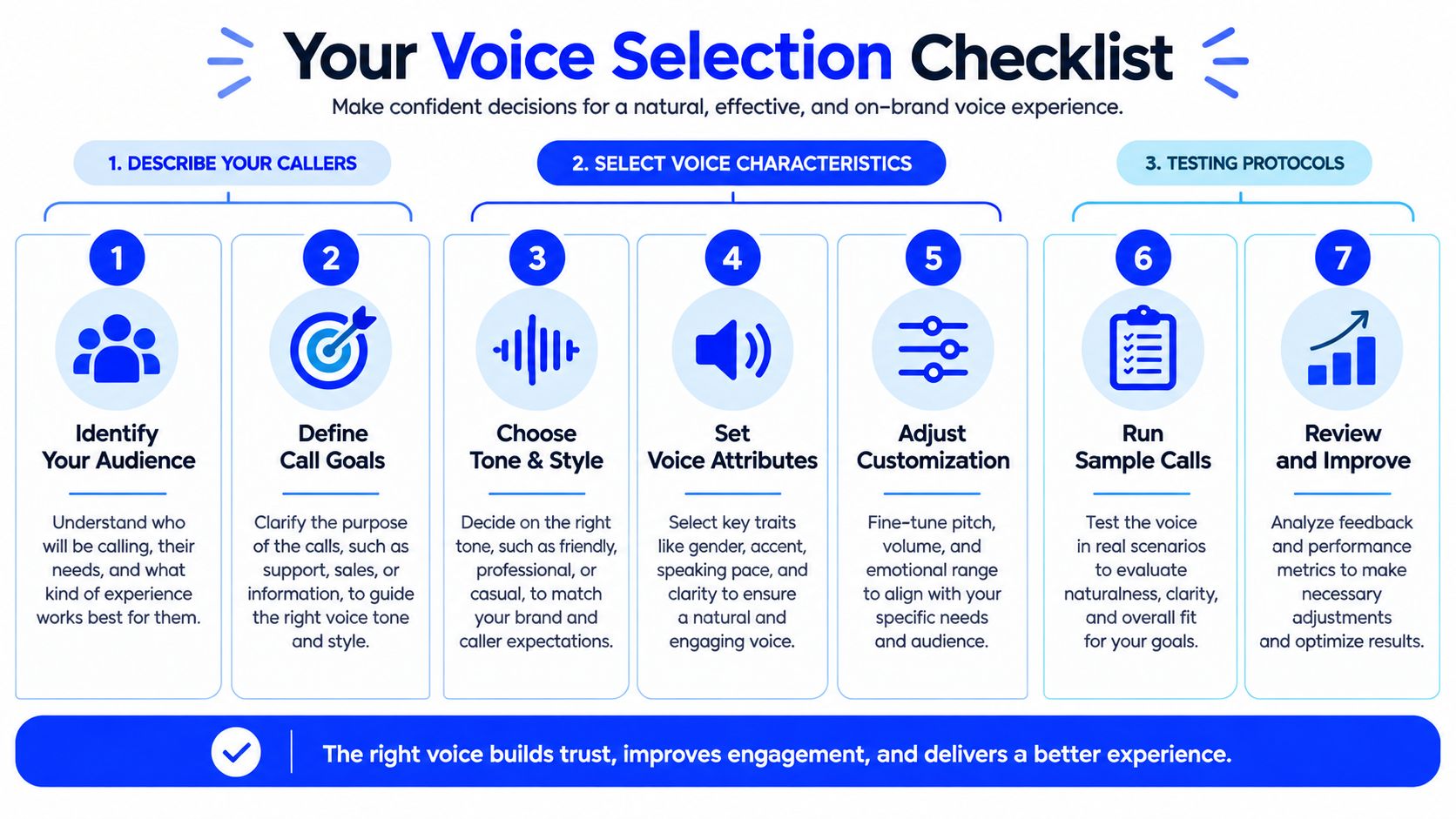
Your Voice Selection Checklist
Before you finalise the choice, write the decision down. A shared checklist prevents a new staff member, operations hire, or second location from changing the voice based only on personal preference.
Start with the caller rather than the preset. Complete the following items in plain language:
- Describe the typical caller: Write one sentence about who usually calls and why.
- Choose the intended feeling: State how that person should feel by the end of the opening exchange, such as reassured, respected, or efficiently guided.
- Set the voice characteristics: Record the tone, pace, formality, and warmth that support that feeling.
- Run representative calls: Test a simple request, an emotional request, an unknown question, and a silent pause.
- Collect an outside reaction: Ask a staff member, customer-like listener, or trusted colleague what sounded natural and what felt awkward.
- Align the surrounding settings: Check the greeting, intake wording, calendar explanations, hold language, and transfer message.
- Schedule the review: Record the launch date and the next review checkpoint so refinement becomes part of normal operations.
A useful checklist includes notes, not just ticks. Write down which prompt sounded natural, where the pace felt rushed, and whether the receptionist offered a clear next step. If someone disagrees with your choice, record the reason rather than changing the voice immediately.
Save the completed checklist with the rest of your call configuration. When you add a service or location, repeat the same process instead of copying a voice setting without testing it. A voice that fits a spa may not fit a medical practice, even when the same owner manages both.
Your choice is ready when the caller can understand the greeting, feel appropriately received, and move towards a useful outcome without unnecessary effort. That's the practical meaning of voice your choice for an AI receptionist.
Heyline lets local, appointment-based businesses choose a caller-facing voice, configure information from their website, connect a calendar, and test the receptionist before launch. Visit Heyline to explore a phone experience that matches your customers and your day-to-day operations.